Peroral Endoscopic Myotomy (POEM)
Peroral Endoscopic Myotomy (POEM) is an advanced minimally invasive endoscopic procedure used to treat disorders of oesophageal muscle relaxation, particularly achalasia. It helps improve the passage of food and liquids from the oesophagus into the stomach by releasing the abnormal muscle tightness at the lower oesophageal sphincter.
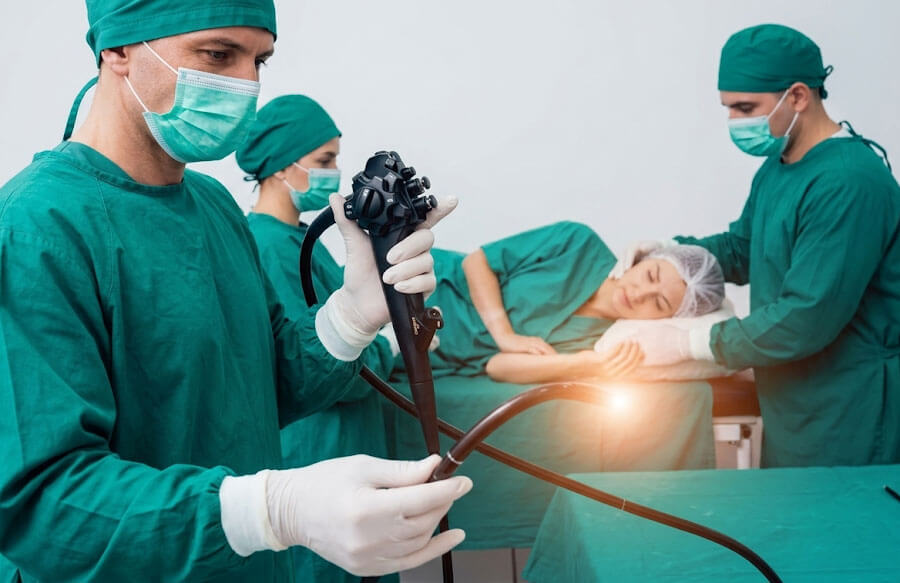
What Is Peroral Endoscopic Myotomy (POEM)?
POEM is an advanced third-space endoscopic procedure performed through the mouth without external surgical incisions. A flexible endoscope is introduced into the oesophagus and used to create a small submucosal tunnel within the oesophageal wall.
Through this tunnel, the gastroenterologist reaches the muscles responsible for the abnormal obstruction and carefully cuts selected muscle fibres. This reduces resistance at the lower oesophageal sphincter and allows food and liquids to pass more easily into the stomach.
Why Is POEM Performed?
POEM is primarily used for achalasia and selected other disorders involving abnormal oesophageal muscle function. It may be considered when symptoms significantly affect swallowing and quality of life.
- Achalasia
- Difficulty swallowing due to oesophageal motility disorders
- Regurgitation of undigested food or liquids
- Oesophageal spasm in selected patients
- Selected disorders involving abnormal oesophageal muscle contractions
- Patients requiring an advanced endoscopic alternative to conventional surgical myotomy
How Is POEM Performed?
POEM is performed under general anaesthesia. A flexible endoscope is introduced through the mouth into the oesophagus. The gastroenterologist creates a small entry point in the oesophageal lining and carefully develops a tunnel within the submucosal layer.
The endoscope is advanced through this tunnel to reach the area of abnormal muscle tightness. Selected muscle fibres are then divided to reduce the resistance at the lower oesophageal sphincter.
After completing the myotomy, the entry point in the oesophageal lining is securely closed using specialised endoscopic clips or other closure techniques. This allows the treated area to heal without external incisions.
POEM for Achalasia
Achalasia is a condition in which the lower oesophageal sphincter does not relax normally and the oesophagus has difficulty moving food into the stomach. This can result in difficulty swallowing, regurgitation, chest discomfort, and progressive difficulty eating.
POEM addresses the muscular component of achalasia by cutting the tight muscle fibres responsible for the obstruction. By reducing this resistance, the procedure can improve the movement of food and liquids into the stomach.
Symptoms That May Require Evaluation
- Progressive difficulty swallowing food or liquids
- Regurgitation of undigested food
- Chest discomfort or pain
- Persistent sensation of food sticking in the chest
- Unintentional weight loss
- Difficulty eating or drinking normally
Benefits of POEM
- Minimally invasive endoscopic procedure
- Performed without external surgical incisions
- Directly targets abnormal oesophageal muscle tightness
- Can significantly improve swallowing in appropriately selected patients
- Useful for different types of achalasia
- May provide an alternative to conventional surgical myotomy in suitable cases
- Can be tailored to the length and location of the abnormal muscle segment
Preparation & Recovery
Patients are generally required to fast before POEM and undergo a detailed pre-procedure assessment. Investigations such as upper GI endoscopy, oesophageal manometry, or imaging may be recommended to confirm the diagnosis and determine the appropriate treatment approach.
After the procedure, patients are monitored closely. Oral intake is usually restarted gradually according to the treating team's instructions. Dietary progression is individualized based on the patient's recovery and the findings after the procedure.
Risks & Considerations
POEM is an advanced endoscopic procedure and is generally performed by specialists with expertise in therapeutic and third-space endoscopy. Potential complications may include bleeding, infection, leakage, mucosal injury, or air-related complications. Acid reflux can also occur after POEM because the procedure reduces the resistance of the lower oesophageal sphincter.
Patients are evaluated carefully before the procedure to determine whether POEM is appropriate based on the type and severity of the oesophageal disorder and their overall health.
Follow-Up After POEM
Follow-up is important to assess improvement in swallowing and other symptoms and to monitor for complications such as acid reflux. The gastroenterologist may recommend follow-up investigations depending on the patient's symptoms and clinical response.
Patients should report persistent chest pain, difficulty swallowing, fever, vomiting, bleeding, or other concerning symptoms after the procedure.
When to Consult a Gastroenterologist?
Progressive difficulty swallowing, recurrent regurgitation, unexplained weight loss, or persistent chest discomfort while eating should be evaluated by a gastroenterologist. Appropriate testing can help identify achalasia or another oesophageal motility disorder and determine whether an advanced treatment such as POEM is suitable.
Final Thoughts
Peroral Endoscopic Myotomy is an advanced third-space endoscopic procedure that provides a minimally invasive treatment option for achalasia and selected oesophageal motility disorders. By carefully releasing abnormal oesophageal muscle tightness, POEM can improve swallowing and help restore the passage of food into the stomach. Dr. Manish Dodmani provides advanced therapeutic endoscopic care with careful patient selection, precise procedural techniques, and individualized follow-up.