Endoscopic Ultrasound (EUS)
Endoscopic Ultrasound (EUS) is an advanced minimally invasive procedure that combines endoscopy with high-resolution ultrasound imaging to examine the digestive tract and nearby organs. It provides detailed images of the gastrointestinal wall, pancreas, liver, bile ducts, lymph nodes, and surrounding structures.
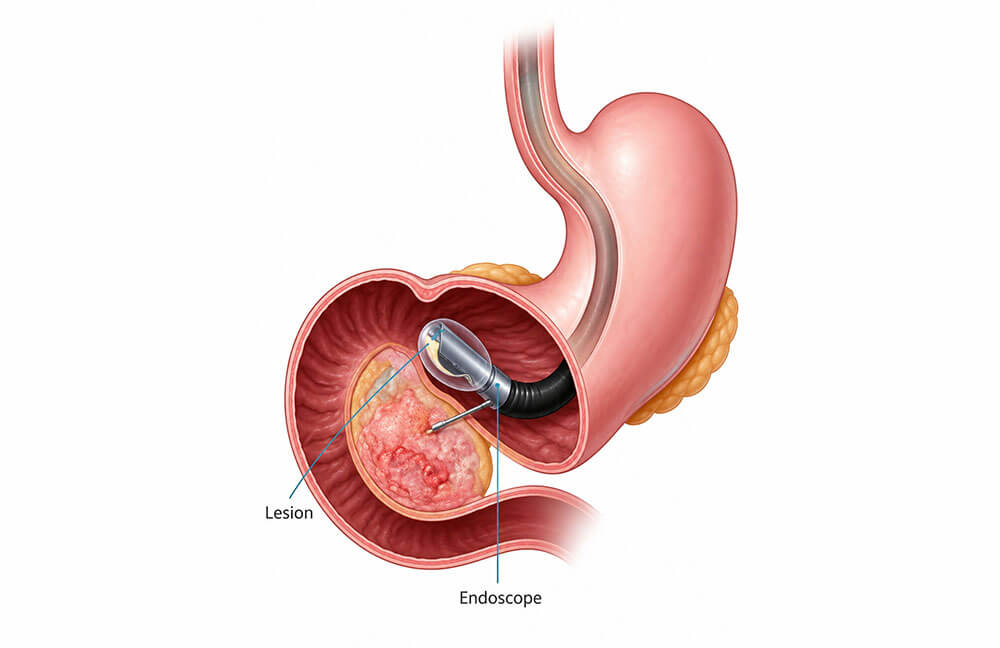
What Is Endoscopic Ultrasound (EUS)?
EUS uses a specialised endoscope fitted with a small ultrasound probe at its tip. The endoscope is gently passed through the mouth or rectum, depending on the area being examined. The ultrasound probe produces detailed images from close to the organs and tissues being evaluated.
One of the major advantages of EUS is that it can provide detailed information about structures that may not be adequately visualised through conventional endoscopy or routine imaging alone. When required, tissue or fluid samples can also be obtained using fine-needle aspiration or fine-needle biopsy.
Why Is EUS Performed?
EUS may be recommended when detailed evaluation of the gastrointestinal tract, pancreas, bile ducts, or surrounding structures is required.
- Evaluation of pancreatic lesions or cysts
- Assessment of pancreatic and biliary disorders
- Evaluation of bile duct abnormalities
- Assessment of gastrointestinal wall lesions
- Evaluation of enlarged lymph nodes
- Assessment of suspected gastrointestinal tumours
- Staging of selected gastrointestinal cancers
- Evaluation of subepithelial gastrointestinal lesions
- Fine-needle aspiration or biopsy of selected lesions
How Is the Procedure Performed?
EUS is generally performed under appropriate sedation or anaesthesia. For upper gastrointestinal EUS, the specialised endoscope is passed through the mouth into the oesophagus, stomach, and duodenum. For selected lower gastrointestinal evaluations, the instrument may be introduced through the rectum.
The ultrasound probe produces detailed images of the digestive tract and surrounding organs. If a suspicious lesion, lymph node, cyst, or other abnormality is identified, a fine needle can be passed through the endoscope to obtain a tissue or fluid sample for further laboratory evaluation.
EUS With FNAC/FNB
EUS-guided Fine-Needle Aspiration (FNAC) and Fine-Needle Biopsy (FNB) allow tissue or fluid to be collected from selected lesions under real-time ultrasound guidance. This can be particularly useful when evaluating pancreatic masses, lymph nodes, subepithelial lesions, or other areas that are difficult to access through conventional biopsy techniques.
The ability to obtain targeted samples during EUS can help establish a more accurate diagnosis and support appropriate treatment planning.
What Can EUS Evaluate?
- Pancreatic masses and cystic lesions
- Bile duct and gallbladder abnormalities
- Gastrointestinal wall lesions
- Subepithelial lesions
- Enlarged lymph nodes
- Selected liver lesions
- Selected gastrointestinal cancers
- Abnormalities surrounding the digestive tract
Role of EUS in Cancer Evaluation
EUS can provide detailed information about the depth and local extent of selected gastrointestinal tumours and can help assess nearby lymph nodes. EUS-guided tissue sampling may also assist in obtaining a diagnosis when required.
For appropriately selected patients, the information obtained through EUS can contribute to staging and help the treating team determine the most suitable management approach.
Preparation & Recovery
Patients undergoing upper gastrointestinal EUS are generally advised to remain fasting for a specified period before the procedure. Medication instructions may vary depending on the patient's medical history, particularly when blood-thinning medicines are being taken.
After sedation or anaesthesia, patients are monitored until they are sufficiently recovered. Mild throat discomfort, bloating, or temporary abdominal discomfort may occur depending on the procedure performed. Specific post-procedure instructions are provided before discharge.
Risks & Considerations
EUS is generally considered a safe procedure when performed by an experienced specialist, but potential risks can vary depending on whether tissue sampling or other interventions are performed. These may include bleeding, infection, perforation, or complications related to sedation. Your gastroenterologist will explain the expected benefits and procedure-specific risks before treatment.
When to Consult a Gastroenterologist?
Patients with unexplained pancreatic or biliary abnormalities, suspected gastrointestinal lesions, enlarged lymph nodes, or findings requiring detailed evaluation may benefit from EUS. A gastroenterologist can determine whether EUS, EUS-guided FNAC/FNB, or another diagnostic procedure is appropriate.
Final Thoughts
Endoscopic Ultrasound is a powerful diagnostic tool that combines detailed endoscopic and ultrasound imaging in a minimally invasive procedure. With the ability to perform targeted FNAC or FNB when required, EUS can provide valuable information for diagnosing and evaluating complex gastrointestinal, pancreatic, and biliary conditions. Dr. Manish Dodmani offers advanced EUS-based evaluation and interventional endoscopic care tailored to each patient's clinical needs.