PEG Placement
Percutaneous Endoscopic Gastrostomy (PEG) placement is a minimally invasive procedure used to provide long-term enteral nutrition directly into the stomach. It is recommended for selected patients who are unable to take adequate nutrition by mouth but have a functioning digestive system.
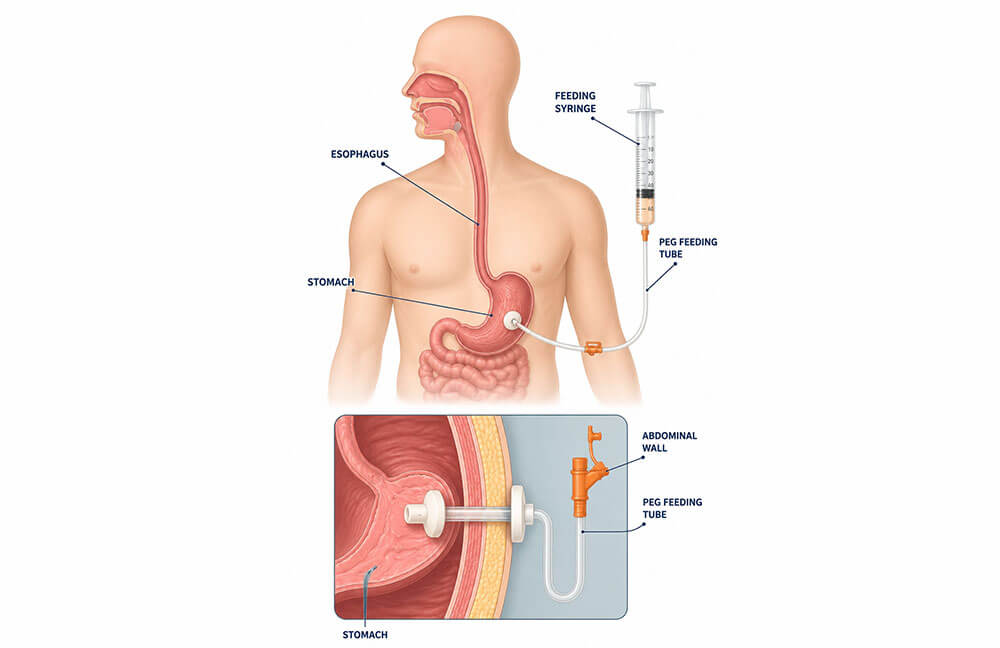
What Is PEG Placement?
PEG placement involves inserting a flexible feeding tube through the abdominal wall directly into the stomach with the assistance of an endoscope. The endoscope allows the gastroenterologist to view the inside of the stomach and select an appropriate site for safe tube placement.
Once positioned, the PEG tube provides a direct route for delivering nutritional formulas, fluids, and prescribed medicines into the stomach. It can be used when oral feeding is not possible or is insufficient to meet the patient's nutritional needs.
Why Is PEG Placement Performed?
PEG placement may be considered for patients who require longer-term enteral feeding because of swallowing difficulties or other medical conditions affecting their ability to eat safely.
- Long-term difficulty swallowing
- Neurological conditions affecting swallowing
- Stroke-related swallowing problems
- Selected head and neck conditions affecting oral intake
- Conditions causing inadequate nutritional intake
- Selected patients requiring prolonged enteral nutrition
- Patients unable to maintain adequate nutrition through oral feeding
How Is PEG Placement Performed?
PEG placement is generally performed under appropriate sedation or anaesthesia. A flexible endoscope is passed through the mouth into the stomach to assess the stomach lining and identify a suitable site for tube placement.
After appropriate preparation of the abdominal area, the feeding tube is guided through a small opening in the abdominal wall and positioned inside the stomach under endoscopic guidance. The tube is secured externally to prevent unwanted movement.
The position of the tube is checked before it is used for feeding. The medical team provides detailed instructions regarding tube care, feeding, medication administration, and monitoring after the procedure.
Benefits of PEG Feeding
- Provides a reliable route for long-term enteral nutrition
- Allows delivery of prescribed nutritional formulas and fluids
- Can be used for administration of selected medicines
- Supports nutritional needs when oral feeding is inadequate
- Minimally invasive compared with surgical gastrostomy
- Allows ongoing nutritional support under medical supervision
Care After PEG Placement
Proper care of the PEG tube and the surrounding skin is important to reduce the risk of infection and other complications. The healthcare team provides instructions regarding cleaning, flushing the tube, feeding schedules, medication administration, and positioning during and after feeding.
Patients and caregivers should follow the recommended feeding plan and report any unusual pain, redness, swelling, leakage, bleeding, or difficulty using the tube to the treating medical team.
Risks & Considerations
PEG placement is generally considered safe when performed in appropriately selected patients, but potential complications can include infection at the tube site, bleeding, leakage, tube blockage or displacement, irritation of the surrounding skin, and other procedure-related complications.
The suitability of PEG placement depends on the patient's overall health, nutritional requirements, swallowing function, digestive system, and expected need for enteral feeding. A detailed assessment is performed before the procedure.
When to Consult a Gastroenterologist?
Patients who are unable to maintain adequate nutrition orally because of persistent swallowing difficulties or other medical conditions may require evaluation for enteral feeding. A gastroenterologist can assess whether PEG placement is appropriate and discuss alternative feeding options when necessary.
Final Thoughts
PEG placement provides an effective minimally invasive route for long-term nutritional support in appropriately selected patients. With proper placement, tube care, and nutritional planning, it can help maintain adequate nutrition when oral feeding is not possible or sufficient. Dr. Manish Dodmani provides endoscopic PEG placement with a focus on safe procedure planning, appropriate patient selection, and comprehensive follow-up care.