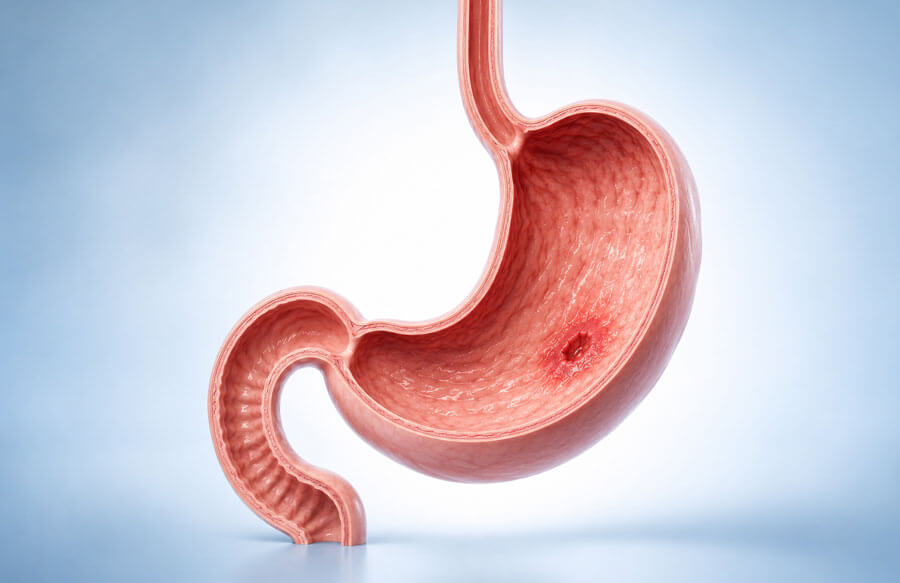
Peptic Ulcer
Peptic ulcers are open sores that develop in the lining of the stomach or the first part of the small intestine. They can cause abdominal discomfort and, if untreated, may lead to complications such as bleeding.
What Is a Peptic Ulcer?
A peptic ulcer develops when the protective lining of the stomach or duodenum is damaged, allowing stomach acid and digestive juices to cause an open sore. Common causes include Helicobacter pylori infection and prolonged use of certain pain-relieving medicines.
Common Symptoms
- Burning or aching upper abdominal pain
- Indigestion or stomach discomfort
- Bloating and belching
- Nausea or vomiting
- Feeling full quickly after eating
- Loss of appetite
- In some cases, dark stools or vomiting blood
Causes & Risk Factors
Peptic ulcers are commonly associated with Helicobacter pylori infection and long-term use of non-steroidal anti-inflammatory drugs (NSAIDs). Other factors such as smoking, excessive alcohol consumption, and certain medical conditions may increase the risk of developing ulcers or their complications.
Diagnosis & Treatment
Diagnosis may involve a detailed medical evaluation, testing for Helicobacter pylori, and upper gastrointestinal endoscopy when required. Treatment depends on the underlying cause and may include medicines that reduce stomach acid, treatment for Helicobacter pylori infection, and appropriate management of medicines that may irritate the stomach lining.
Lifestyle Tips
- Follow regular and balanced eating habits
- Avoid foods that worsen your symptoms
- Limit excessive alcohol consumption
- Avoid smoking
- Do not take pain-relieving medicines unnecessarily
- Take prescribed medicines exactly as advised
When to See a Doctor?
Persistent or recurring upper abdominal pain, indigestion, nausea, or unexplained weight loss should be evaluated by a gastroenterologist. Vomiting blood, passing black or tarry stools, severe abdominal pain, dizziness, or weakness may indicate ulcer-related bleeding and requires urgent medical attention.
Final Thoughts
Peptic ulcers can often be treated effectively once the underlying cause is identified. Timely diagnosis and appropriate medical management can relieve symptoms, promote healing, and help prevent complications such as bleeding or perforation.