Endoscopic Submucosal Dissection (ESD)
Endoscopic Submucosal Dissection (ESD) is an advanced therapeutic endoscopic procedure used to remove selected superficial gastrointestinal lesions in a single piece. It allows precise removal of abnormal or early-stage lesions while preserving the surrounding digestive tract and may help avoid conventional surgery in appropriately selected patients.
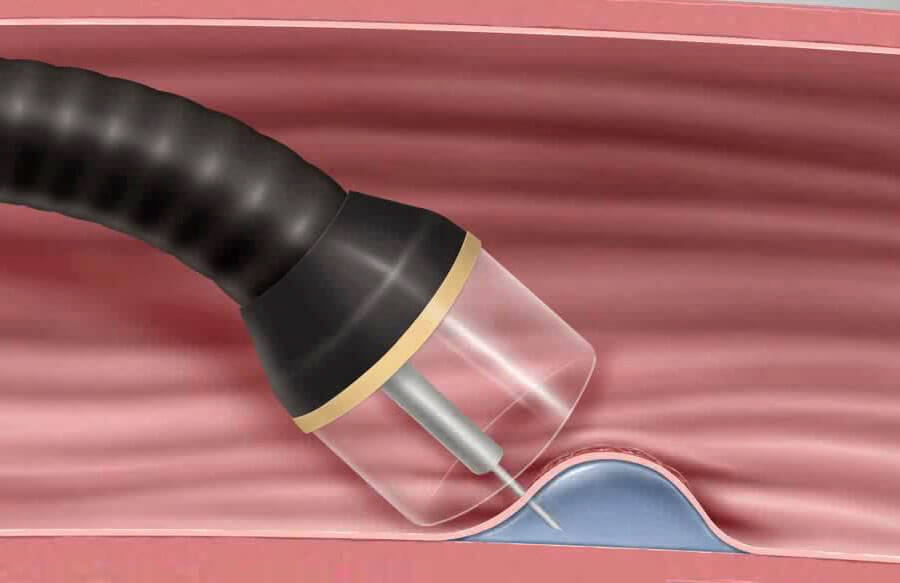
What Is Endoscopic Submucosal Dissection (ESD)?
ESD is a specialised third-space endoscopic technique that enables the gastroenterologist to remove a superficial gastrointestinal lesion by dissecting it from the deeper layers of the intestinal wall. Unlike standard polypectomy or some EMR techniques, ESD is designed to remove suitable larger or complex lesions in one piece.
The procedure is performed entirely through a flexible endoscope, without external surgical incisions. The removed specimen can then be examined in detail by a pathologist to assess the depth, characteristics, and completeness of removal.
Why Is ESD Performed?
ESD may be considered for selected superficial gastrointestinal lesions where precise and complete removal is required. Careful assessment is performed before treatment to determine whether the lesion is suitable for endoscopic resection.
- Selected early gastrointestinal cancers
- Superficial oesophageal lesions
- Selected early gastric cancers
- Large or complex superficial gastrointestinal lesions
- Selected precancerous lesions
- Lesions requiring en bloc removal for accurate pathological assessment
- Selected lesions where conventional EMR may not provide complete removal
How Is ESD Performed?
ESD is generally performed under appropriate sedation or anaesthesia using a specialised flexible endoscope. The gastroenterologist first carefully examines and maps the lesion and marks its boundaries.
A small amount of fluid may be injected beneath the lesion to lift it away from the deeper layers of the gastrointestinal wall. The superficial mucosa is then carefully incised around the marked area.
The gastroenterologist subsequently dissects through the submucosal layer using specialised endoscopic instruments until the lesion is completely separated from the underlying tissue. The entire specimen is then retrieved for pathological examination.
After removal, the treatment site is carefully inspected and appropriate endoscopic measures are used to control bleeding or manage the treatment area when required.
ESD for Early Gastrointestinal Cancer
Selected early gastrointestinal cancers that are confined to superficial layers may be suitable for endoscopic removal. ESD allows the lesion to be removed in one piece, providing an intact specimen for detailed pathological assessment.
The suitability of ESD depends on factors such as the lesion's size, location, appearance, depth of invasion, and other clinical and pathological characteristics. Not every gastrointestinal cancer can be treated with ESD, and some patients may require surgery or another form of treatment.
ESD vs. EMR
Both ESD and Endoscopic Mucosal Resection (EMR) are advanced techniques for removing superficial gastrointestinal lesions. EMR is commonly used for appropriately selected lesions and may involve removal in sections when lesions are larger.
ESD allows the gastroenterologist to dissect beneath the lesion and remove suitable lesions in a single piece, which can be particularly valuable when complete removal and precise pathological assessment are important.
Benefits of ESD
- Minimally invasive endoscopic treatment
- Allows en bloc removal of selected lesions
- Provides an intact specimen for detailed pathological examination
- Can treat selected larger and complex superficial lesions
- May reduce the need for conventional surgery in appropriately selected cases
- Helps preserve the surrounding gastrointestinal anatomy
- Allows precise assessment of the depth and completeness of lesion removal
Preparation & Recovery
Preparation depends on the location of the lesion and the type of procedure being performed. Patients are generally required to fast before the procedure, and additional bowel preparation may be necessary for lesions located in the colon or lower gastrointestinal tract.
Following ESD, patients may require observation or a short hospital stay depending on the size and location of the resection and their overall condition. Diet is usually restarted gradually according to the gastroenterologist's recommendations.
Risks & Considerations
ESD is a technically advanced procedure and carries potential risks such as bleeding, perforation, infection, abdominal or chest discomfort, and other procedure-related complications. The risk varies depending on the location, size, depth, and complexity of the lesion.
Careful pre-procedure assessment is essential to determine whether endoscopic resection is appropriate. Lesions with deeper invasion or characteristics suggesting a higher risk of lymph node involvement may require surgical or multidisciplinary treatment instead.
Follow-Up After ESD
Follow-up after ESD is important because the pathology report provides detailed information about the removed lesion, including its depth and whether it has been completely excised. The findings help determine whether the endoscopic treatment is considered curative or whether additional treatment may be required.
Patients may require scheduled endoscopic surveillance to monitor the treatment site and check for recurrence or new lesions. Follow-up intervals are individualized according to the pathology findings and the patient's underlying condition.
When to Consult a Gastroenterologist?
Patients with suspicious gastrointestinal lesions, large polyps, early-stage superficial cancers, or abnormal findings detected during endoscopy may require evaluation by an experienced therapeutic endoscopist. Detailed assessment helps determine whether ESD, EMR, surgery, or another treatment option is most appropriate.
Final Thoughts
Endoscopic Submucosal Dissection is an advanced therapeutic endoscopic technique that enables precise, en bloc removal of selected superficial gastrointestinal lesions. It can provide effective treatment while preserving the surrounding digestive tract and supplying an intact specimen for accurate pathological evaluation. Dr. Manish Dodmani offers advanced interventional endoscopic care with careful lesion assessment, precise treatment, and individualized follow-up.